
Broad or Split Peaks in ANP When Using Methanol ‑ Rich Diluents - Tips and Suggestions
February 7, 2014
/
/
/
/
/
Date: 7-FEBRUARY-2014 Last Updated: 7-FEBRUARY-2026

In an Aqueous Normal Phase (ANP) method on a Cogent Diamond Hydride™ column, a user observed two broad, split peaks and low retention for pyrazinoic acid.
The method used an ACN/DI water/formic acid mobile phase, but the sample diluent was 50:50 methanol/acetonitrile (no water).
The method used an ACN/DI water/formic acid mobile phase, but the sample diluent was 50:50 methanol/acetonitrile (no water).
Root Cause (Most Likely)
A methanol/ACN diluent without water can be mismatched to an ANP mobile phase that contains water. This mismatch often causes fronting, splitting, and band broadening, especially for polar/ionizable analytes like carboxylic acids. In ANP, a small water fraction is crucial in the injection plug to maintain consistent partitioning at the silica‑hydride interface.Recommended Fixes
1) Match the Diluent to the Mobile Phase Environment
Switch the sample diluent to 50/50/0.1 acetonitrile/DI water/formic acid (v/v/v).
This simple change frequently collapses split peaks and sharpens band shapes in ANP by keeping the injection plug composition closer to the initial mobile phase and maintaining the proper hydration/ionization balance at injection.
This simple change frequently collapses split peaks and sharpens band shapes in ANP by keeping the injection plug composition closer to the initial mobile phase and maintaining the proper hydration/ionization balance at injection.
2) If Peak Issues Persist, Use a Volatile Buffer for ANP
Try 10 mM ammonium acetate as both mobile phase and diluent (still LC–MS compatible). For pyrazinoic acid, acquisition will typically be in negative ESI and you should monitor the [M–H]⁻ ion. Buffering and operating in negative mode increase retention for carboxylates and often improve symmetry.
Why These Adjustments Work (Technical Rationale)
- Water in the diluent: ANP relies on a polar organic mobile phase (high ACN) plus some water; omitting water from the injection solvent destabilizes the analyte’s partition/adsorption equilibrium at the head of the column, leading to split or broad peaks. Adding a modest water fraction (with a trace of acid) stabilizes the initial interaction and tightens bands.
- Ammonium acetate in negative mode: For carboxylic acids, partial or full ionization in negative ESI and volatile buffering can strengthen ANP retention and decrease secondary interactions—improving both retention and peak shape while keeping the system MS‑friendly.
Implementation Checklist
- Change diluent first: Use ACN/Water/Formic Acid = 50/50/0.1 (v/v/v). Re‑inject and assess peak shape and retention.
- If needed, switch to volatile buffer: Run 10 mM ammonium acetate in both mobile phase and diluent; acquire in ESI–negative and track [M–H]⁻ for pyrazinoic acid. Expect stronger retention vs. the formic‑acid‑only system.
- Re‑balance gradient: In ANP, start at high %B (ACN) and introduce water gradually; adjust slope so the polar acid elutes resolved and symmetric (shorter dwell/shallower drop in %B can fine‑tune resolution).
- Verify with standards: Run a standard in both old and new conditions to document improvements in tailing factor, plate count, and %RSD. (Good practice for regulated labs.)
- Record the diluent rule: For ANP methods on Diamond Hydride™, include water in the diluent to avoid injection mismatch—especially for polar acids/bases.
Summary
- Problem: Split/broad peaks and low retention for pyrazinoic acid in ANP with MeOH/ACN diluent (no water).
- Fix #1: Use ACN/Water/Formic Acid (50/50/0.1) as diluent to match ANP’s aqueous/organic environment.
- Fix #2: If needed, adopt 10 mM ammonium acetate (mobile phase + diluent) and ESI–negative; monitor [M–H]⁻; expect stronger retention and improved shape.
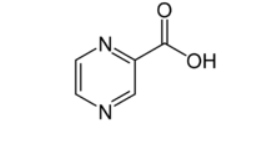
Pyrazinoic Acid